Showing posts with label writing. Show all posts
Showing posts with label writing. Show all posts
Saturday, February 9, 2013
Weave Magazine Issue 8 is available!
The beautiful eighth issue of Weave Magazine is now available for purchase! I have a short story included, and I'm honored to be in such good company. Thanks to the editors for all their hard work! Check it out here.

Thursday, December 6, 2012
On Death and Cats (both the house and tiger varieties)
The nice people at Floodwall Magazine have recently published my short story, "A Certain Way of Alone." Check it out, along with the awesome stories I'm honored to be published next to. You'll encounter existentialist cats (are there any other kind?), philandering photographers, a menacing bear, and other curious creatures.


Friday, November 30, 2012
Beautiful cover art!
I'm a bit behind the times here, but I just saw that Weave Magazine has posted the cover art for their next issue. I'm extremely lucky to be included in the contributors for Issue 08 and can't believe how gorgeous the art is! This lovely lady will be available Jan 2013. Mark your calendars!


Times like these I wish I was a poet
This morning the bus driver had an altercation with a young woman. I couldn't hear what they were discussing, but she seemed to be asking for some sort of apology. Their voices rose, he kept the bus idling at the green light, and soon everyone on the bus was looking at them. Then she got off and, as we pulled away, I saw her hands covering her face as she sobbed.
Another woman on the bus gently told the bus driver, "You know, sometimes you just have to say, 'I'm sorry. Have a nice day.'" This sparked a lively debate between that woman and another rider, which lasted a few heated blocks until they all got off. All along, the woman staunchly defended the weeping lady - just because her feelings had been hurt.
I wish I could have told the young woman what had happened once the bus pulled away. She stood on the curb sobbing, brushing the tears from her cheeks with the back of her hand like a lost child. That was the start to her day. She'll never know that half the bus looked on in sympathy as we pulled away, and that a brave woman defended her. All she had was the confusion and hurt.
It's a small thing, that woman's unconsoled pain. I know that. But still, the world seemed just a little out of balance when the consolation, the empathy she seemed to need, drove away without her knowing it. That's what poetry is for, I think. To try to nudge the world back into balance by snatching at those sparks of life that we might otherwise miss and breathing them into flame for us to see. I wish I could give that woman a poem.
Another woman on the bus gently told the bus driver, "You know, sometimes you just have to say, 'I'm sorry. Have a nice day.'" This sparked a lively debate between that woman and another rider, which lasted a few heated blocks until they all got off. All along, the woman staunchly defended the weeping lady - just because her feelings had been hurt.
I wish I could have told the young woman what had happened once the bus pulled away. She stood on the curb sobbing, brushing the tears from her cheeks with the back of her hand like a lost child. That was the start to her day. She'll never know that half the bus looked on in sympathy as we pulled away, and that a brave woman defended her. All she had was the confusion and hurt.
It's a small thing, that woman's unconsoled pain. I know that. But still, the world seemed just a little out of balance when the consolation, the empathy she seemed to need, drove away without her knowing it. That's what poetry is for, I think. To try to nudge the world back into balance by snatching at those sparks of life that we might otherwise miss and breathing them into flame for us to see. I wish I could give that woman a poem.
Sunday, June 17, 2012
Tutorial: Tracking your short story submissions
The most recently visited website on my browser isn't my email account or the New York Times, even though I check those multiple times a day. The site that occupies top honors on my computer is Duotrope, and I'm here to spread the gospel.
Duotrope is a free site that offers an extensive database of literary markets (primarily journals, magazines and zines) that publish fiction, poetry and (in beta) non-fiction. Duotrope lists information about each market and - here's where my obsession comes in - tracks data from users about submissions. Have you sent a poem to Tin House? You can see how many other users have sent poems in the past twelve months, what Tin House's acceptance rate is, how long responses take (for acceptances and rejections), what percentage of submissions receive form rejections as opposed to personal ones, and how recently users have reported responses. Among other neat data points. But enough telling - let me show you some of the awesome.
Let's say you want to search for a journal that publishes sci fi short stories in paper medium only, and you want to submit your story electronically. Here's what that would look like:

I didn't make this selection, but you can order your search in a few ways, including from most to least accepting, and in terms of response time (in case you're in a rush).
The real (obsessive) fun starts once you've found a journal to submit your story to. Let's say we're going to try to be the first Duotroper to publish a story with One Story. I'll go to Search, Find by Title, and pull up the listing for One Story. (They're currently temporarily closed to submissions, so let's time travel here and pretend it's September 2012). When I log in with my account, I see that Duotrope has received 507 reports from users regarding submissions to One Story over the past year. None have yet been accepted. But that's ok, we'll be the first one! On the right side of the page, we click "Report Submission/Response." The image below shows the submission page, where we note the date we submitted our story, the status ("Pending Response"), the title of the story, and how we submitted. Wait, the title? First, we have to make an entry in Duotrope for our story - that's so you can tell which story (or poem or essay) you've submitted where. So click "I need to add a piece to my list" (second arrow below) and go ahead.

Once you've reported your submission, Duotrope starts its magic. You can tell how many days your story has been out for submission, and you can track how your wait compares to the average response times. You can even check out a publication's entry to see when the last recorded response was, and the most recent date of a submission that's recorded a response. (So, for our One Story submission that we sent on September 12, 2012, in November 2012 we see that the latest response was October 31 and that they have sent responses for stories submitted as recently as September 1. So that might suggest they haven't gotten to our story yet.)
Here's my submission tracker, for example. You can see some of the stories I have submitted and how many days out they are.

There are more features than I can go over in a short post, but I'm happy to answer any questions. It's really an amazing site - very empowering for writers, and hopefully useful for publishers, who can see how their response times stack up against their peers. So, go forth and submit!
Duotrope is a free site that offers an extensive database of literary markets (primarily journals, magazines and zines) that publish fiction, poetry and (in beta) non-fiction. Duotrope lists information about each market and - here's where my obsession comes in - tracks data from users about submissions. Have you sent a poem to Tin House? You can see how many other users have sent poems in the past twelve months, what Tin House's acceptance rate is, how long responses take (for acceptances and rejections), what percentage of submissions receive form rejections as opposed to personal ones, and how recently users have reported responses. Among other neat data points. But enough telling - let me show you some of the awesome.
Let's say you want to search for a journal that publishes sci fi short stories in paper medium only, and you want to submit your story electronically. Here's what that would look like:

I didn't make this selection, but you can order your search in a few ways, including from most to least accepting, and in terms of response time (in case you're in a rush).
The real (obsessive) fun starts once you've found a journal to submit your story to. Let's say we're going to try to be the first Duotroper to publish a story with One Story. I'll go to Search, Find by Title, and pull up the listing for One Story. (They're currently temporarily closed to submissions, so let's time travel here and pretend it's September 2012). When I log in with my account, I see that Duotrope has received 507 reports from users regarding submissions to One Story over the past year. None have yet been accepted. But that's ok, we'll be the first one! On the right side of the page, we click "Report Submission/Response." The image below shows the submission page, where we note the date we submitted our story, the status ("Pending Response"), the title of the story, and how we submitted. Wait, the title? First, we have to make an entry in Duotrope for our story - that's so you can tell which story (or poem or essay) you've submitted where. So click "I need to add a piece to my list" (second arrow below) and go ahead.

Once you've reported your submission, Duotrope starts its magic. You can tell how many days your story has been out for submission, and you can track how your wait compares to the average response times. You can even check out a publication's entry to see when the last recorded response was, and the most recent date of a submission that's recorded a response. (So, for our One Story submission that we sent on September 12, 2012, in November 2012 we see that the latest response was October 31 and that they have sent responses for stories submitted as recently as September 1. So that might suggest they haven't gotten to our story yet.)
Here's my submission tracker, for example. You can see some of the stories I have submitted and how many days out they are.

There are more features than I can go over in a short post, but I'm happy to answer any questions. It's really an amazing site - very empowering for writers, and hopefully useful for publishers, who can see how their response times stack up against their peers. So, go forth and submit!
Monday, October 31, 2011
That Crazy Love for Writing
The other night, when I was in one of my periodic "my writing stinks I don't know why I bother with this madness and I'll never get a novel published" moods, my husband ventured that he thought I enjoyed writing for the sake of writing, regardless of whether or not I had an audience. Well, not exactly, I tried to explain, without sounding like a raving egoist. Writing is about communication, fundamentally, and storytellers want their stories shared. He parried with the counterexample of diarists, who write for themselves. I admitted he had a point, but conceded my weakness - that's just not me. I guess I do want the validation of publication and someone else's approval. Isn't that embarrassing.
 But now, thanks to Betsy Lerner's wonderful, funny, and instructive The Forest for the Trees, I can feel justified in being in good company! Lerner's book is the second of two I've read recently about the more personal, intimate sides of writing. She and Bonnie Friedman (in Writing Past Dark) explore the knotted mess of fear and ego that both propels and hinders writers. As Lerner reminds us, writers are people who write. She says, "When writers say they have no choice, what they mean is: Everything in the world conspired to make me quit but I kept going." Yes, that sounds about right.
Friedman and Lerner both urge writers to dig deeper into themselves, to use writing to express those burning emotions that are doing everything to evade our thoughts and our pens. That's a good reminder, I think -- encouragement to take risks with our characters and our readers. I know that my tendency to want to be nice to people bleeds into my writing and subverts my efforts to build tension. Thanks to my writing group and authors like Lerner and Friedman, I'm at least aware of the weakness and know to press myself.
Most importantly, I've been reminded that writing is hard work and slogging through the emotional roller coaster is a natural part of the process. As Lerner notes, "Writing is nothing but a long distance race. The same kind of hubris that can cripple a runner who doesn't properly train can also derail a writer from reaching his goal." With that in mind, it's nose to the grindstone. With a periodic pat on the back for seeing my first published story hit the streets. We'll all keep working at it!
Isn't the cover of The Forest for the Trees just beautiful??

Friedman and Lerner both urge writers to dig deeper into themselves, to use writing to express those burning emotions that are doing everything to evade our thoughts and our pens. That's a good reminder, I think -- encouragement to take risks with our characters and our readers. I know that my tendency to want to be nice to people bleeds into my writing and subverts my efforts to build tension. Thanks to my writing group and authors like Lerner and Friedman, I'm at least aware of the weakness and know to press myself.
Most importantly, I've been reminded that writing is hard work and slogging through the emotional roller coaster is a natural part of the process. As Lerner notes, "Writing is nothing but a long distance race. The same kind of hubris that can cripple a runner who doesn't properly train can also derail a writer from reaching his goal." With that in mind, it's nose to the grindstone. With a periodic pat on the back for seeing my first published story hit the streets. We'll all keep working at it!
Isn't the cover of The Forest for the Trees just beautiful??
Thursday, October 6, 2011
Confident writing
It's fun to enter contests. There's the element of surprise and a sort of carefree, what-the-heck release that comes from tossing your hat in the ring. Just like that silly carnival game where you flip over a random rubber duck. Yeah, you probably won't win but hey, those duckies are cute. Bayou magazine sponsors annual prizes in fiction and poetry that include the added benefit of a subscription to the journal for your $15 entry fee. (So check it out and throw your 7,500-word-or-less hat into their ring!)

The first piece in Bayou's latest issue (#35) is titled, unappealingly, "Shitstick." Against my natural inclination, I started reading anyway. It did not take long for the author to grab my attention, and he held it, in spite of the fact that the essay is about young boys I didn't have much sympathy for and a childhood experience I could not relate to. It was the writing. Hans Burger, in his first publication, has some damned confident prose. And just like with dating, confidence is attractive.
As a result, I've been thinking about what exactly makes writing confident. The easy answer is "doing everything right" - displaying the right details, choosing the most fitting words, and balancing between description and action, among other things. But that answer seems like a cop-out to me. Perhaps confident writing is nothing more than the intangible sense a writer gives when she knows what she has to say and says it with the most perfect economy available. But perhaps confidence is a mirage, the result of layers upon layers of careful editing. I suspect that no amount of editing can make uncertain prose gleam with confidence, but I'm open to being convinced.
Photo from the Rubber Duck Regatta, a program to benefit prevention of elder abuse.

The first piece in Bayou's latest issue (#35) is titled, unappealingly, "Shitstick." Against my natural inclination, I started reading anyway. It did not take long for the author to grab my attention, and he held it, in spite of the fact that the essay is about young boys I didn't have much sympathy for and a childhood experience I could not relate to. It was the writing. Hans Burger, in his first publication, has some damned confident prose. And just like with dating, confidence is attractive.
As a result, I've been thinking about what exactly makes writing confident. The easy answer is "doing everything right" - displaying the right details, choosing the most fitting words, and balancing between description and action, among other things. But that answer seems like a cop-out to me. Perhaps confident writing is nothing more than the intangible sense a writer gives when she knows what she has to say and says it with the most perfect economy available. But perhaps confidence is a mirage, the result of layers upon layers of careful editing. I suspect that no amount of editing can make uncertain prose gleam with confidence, but I'm open to being convinced.
Photo from the Rubber Duck Regatta, a program to benefit prevention of elder abuse.
Thursday, September 22, 2011
Personality types and characters

Aside from the personal and relationship value (like understanding why my husband forgets to shave or immediately jumps into picking apart a news article I thought was "neat"), I found the exercises also useful for my writing. What personality types are my characters? I think my most recent character is an ENFP - she's definitely into the abstract, and does not need to have things planned out. In fact, being willing to fly by the seat of her pants gets her in considerable trouble, when she follows someone else's lead into a very dangerous situation. I like the idea of using this framework in my writing in the future, particularly for helping me understand the conflict between my characters. I know folks out there use character worksheets - what are some of the other tools you use?
Sunday, August 28, 2011
The beauty of language
I've already blogged about how much I enjoyed The Elegance of the Hedgehog, but given my interest in brevity I didn't get a chance to delve into why. Barbery's love for language and beauty are really inspiring, especially for writers and aspiring writers. Take this quote, for example:
(Emphasis mine)
Isn't that lovely? Doesn't it make you want to pore over a dictionary, or at least crack open a book of poetry?
In that spirit, I'll take the liberty of a second quote, this time from Langston Hughes, who taught me that I could like poetry.
Midnight Dancer
Excerpted from Selected Poems of Langston Hughes.
"Language is a bountiful gift and its usage, an elaboration of community and society, is a sacred work. Language and usage evolve over time: elements change, are forgotten or reborn, and while there are instances where transgression can become the source of an even greater wealth, this does not alter the fact that to be entitled to the liberties of playfulness or enlightened misuse when using language, one must first and foremost have sworn one's total allegiance."
(Emphasis mine)
Isn't that lovely? Doesn't it make you want to pore over a dictionary, or at least crack open a book of poetry?
In that spirit, I'll take the liberty of a second quote, this time from Langston Hughes, who taught me that I could like poetry.
Midnight Dancer
- Wine-maiden
- Of the jazz-tuned night,
- Lips
- Sweet as purple dew,
- Breasts
- Like the pillows of all sweet dreams,
- Who crushed
- The grapes of joy
- And dripped their juice
- On you?
- Of the jazz-tuned night,
Excerpted from Selected Poems of Langston Hughes.
Sunday, July 24, 2011
A taste of Wharton society

Edith Wharton, the first woman to win a Pulitzer Prize for Fiction, spent ten crucial years of her life in Lenox, MA at her custom-built estate, The Mount. Wharton designed the house as both a congenial home for guests (like Henry James) and a retreat for herself. She wrote some of her most important books there, including Ethan Frome and House of Mirth.
Before traveling to Albany this weekend for my pilgrimage to Lenox, I read some of Wharton's classics. I re-read Ethan Frome this winter and was thrilled to rediscover how cold and stark the story is. A great winter read. Then I read House of Mirth and Age of Innocence just before traveling, and they were both beautiful experiences (man, could that woman write) and wonderful introductions to Wharton's life in upper society New York. Given all the frivolous class preoccupations that she skewers in both novels, it's easy to see how Wharton treasured her time at The Mount, away from the brass materialism and snobbish distinctions of Fifth Avenue society.
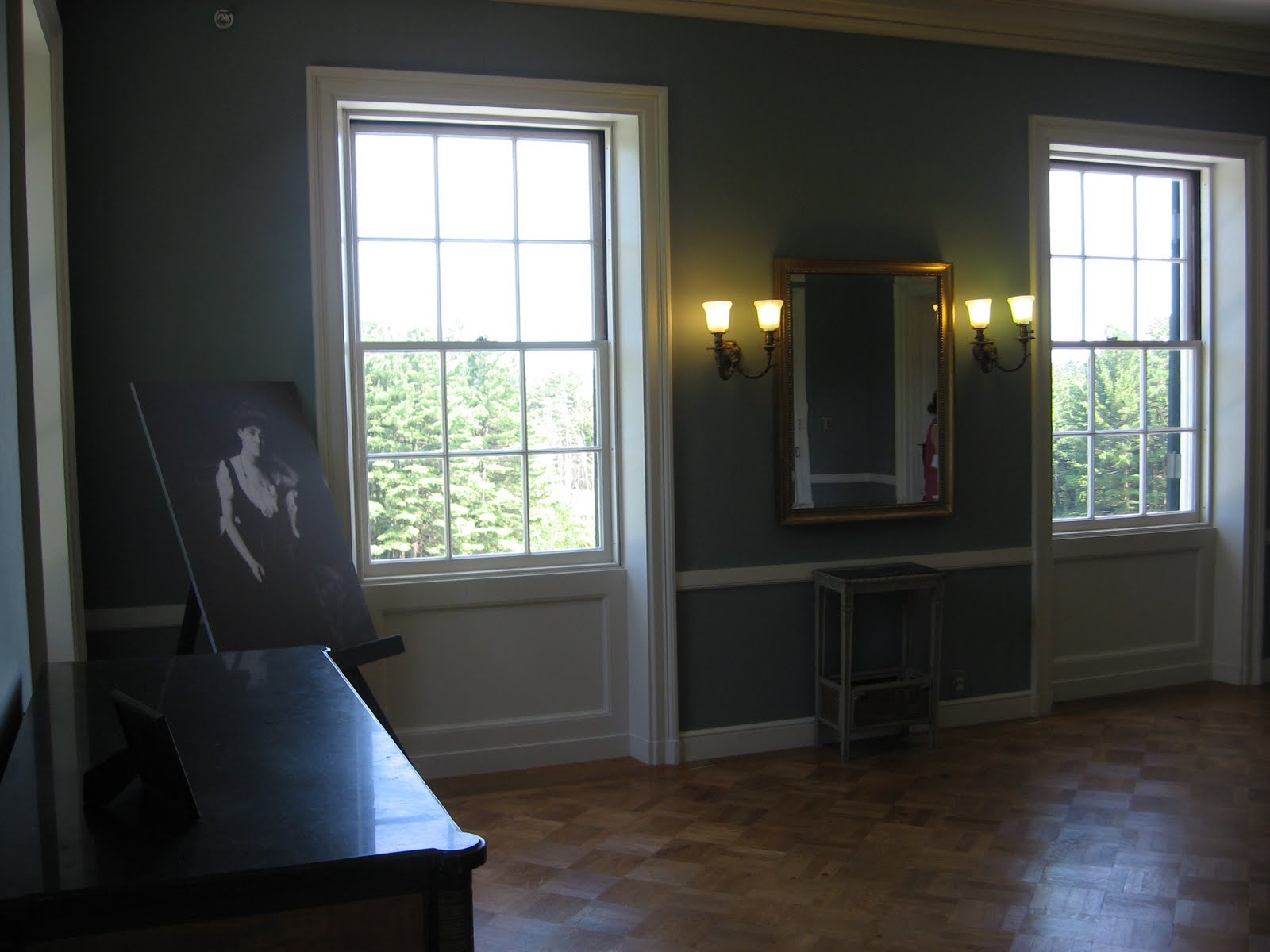
Wharton did all of her writing in bed (posed pictures at her desk notwithstanding), and obviously made the most of her life of leisure. But she was also a divorcee in Paris when the Great War broke out, and she worked tirelessly to promote relief efforts and to publicize the civilian cost of the war.
Right: Wharton's bedroom

Thursday, July 21, 2011
What you do while you're waiting

In Venezuela the other day, a reporter recorded 117 people standing in line outside a government building. Waiting. Like so many Venezuelans they were starting (or spending) their day waiting in a line. This line was to use the only working elevator in that building. There were, of course, other lines after reaching the correct floor.
This NYT article about waiting in Venezuela mentioned what the people were doing as they waited. Waiting is interesting - it's an inescapable part of life, even with all our hustle bustle. I wait for the bus in the morning, wait in line at the cafeteria, wait for the water to boil so I can make pasta.
How do we spend all that time waiting? Stephen King says he keeps a book on him always, so whenever he's slogging through a line, at the grocery store or waiting to pick up his kids from school, he can pull out his book and read a few lines. I've tried to adopt that habit, and having a book in my purse certainly makes me a lot more patient when the bus is running late or when my lunch appointment gets lost. I don't have a smart phone (nor do I want one) so I can't check the internet, but that's often what my husband does when he waits.
Some people seem to do nothing while they wait. No books, no newspaper. Part of me thinks that seems like a horrible waste of time. But part of me thinks that maybe my imagination could stand to be let loose a bit when I wait, or that I could work on "being present," as they say.
How do you wait? Is that a good place for writing?
Sunday, July 10, 2011
The Season's Bounty

I love the Farmer's Market at this time of year. We joined a CSA this year to help ease our shopping trips, but I still can't resist the lure. I slogged through the thick-as-butter humidity this morning to make it out to the market and was amply rewarded. Check out the beautiful flowers I bought!
I also snagged some sour cherries, one of my favorite seasonal treats. I think this may have been the last week to get them in our part of our woods, so I'm grateful I made the hike. I made a cherry pie filling with them today - just added rum, vanilla, and sugar. (My theory is that every cooked fruit dish is improved by some sort of alcohol - rum, brandy, or vodka, usually.) I'm going to have to really exercise restraint to avoid eating these for a week so they can survive until next weekend, when I'll plop them into the pie crust I made ages ago and just need to bake.

Have fun enjoying your summer bounty! I'll be tucking into a homemade zucchini bread shortly - fuel for the work I'm doing on my current manuscript-in-progress.
Sunday, June 5, 2011
Creativity, the non-writing kind
As I've posted before, I love making stop-motion animation. This started with childhood projects done with my dad's Betamax camcorder (ok, he did most of the work, we watched the giant bunny demolish the doll house) and took a hiatus until college. I've only managed two now since getting my cool video editing software, but here's the latest. It also explains why, in a little while, my life is going to get very busy and I'm not sure how much time I'll have for writing. (Which means I need to get as much done as possible soon!)
Note, this is best with sound on.
Note, this is best with sound on.
Saturday, May 14, 2011
Everyone's got a background

We had a vigorous discussion at my last writers group meeting, prompted by two long submissions group members had given us to work on. One, from a member I'll call Kelly, was the beginning of a very creative novel with all sorts of weird things going on. Well, in actuality, "going on" is not the right term, since 80 percent of the submission was background. Where the characters came from, how they met each other, what they thought about their various provenances, how they related with their parents. I found it frustrating. Just get on with the story, already!
To my surprise, not everyone in the critique group agreed. And Kelly seized upon the dissent to disregard the comments of those of us who felt there was too much background, not enough present story time. Well, I'm biased, but I'm pretty confident I was right that the story felt like it was stuck in sludge. But I guess she'll either find out the old-fashioned way (rejection - hey, we've all had our share) or prove me wrong.
But in the meantime, I've been paying attention to how published authors kick their stories off and how much background they incorporate. I finally read a novel that I enjoyed (after a bit of a dry spell) and although Khaled Hosseini starts A Thousand Splendid Suns at nearly the beginning of his character's life -- she's five -- the story itself starts right then. He's not looking back and giving us background on Mariam's childhood, he's throwing us into the tumult from the beginning. An extended quote:
"Mariam was five hears old the first time she heard the word harami.
It happened on a Thursday. It must have, because Mariam remembered that she had been restless and preoccupied that day, the way she was only on Thursdays, the day when Jalil visited her at the kolba. To pass the time until the moment that she would see him at last, crossing the knee-high grass in the clearing and waving, Mariam had climbed a chair and taken down her mother's Chinese tea set. The tea set was the sole relic that Mariam's mother, Nana, had of her own mother, who died with Nana was two. Nana cherished each blue-and-white porcelain piece, the graceful curve of the pot's spout, the hand-painted finches and chrysanthemums, the dragon on the sugar bowl, meant to ward off evil.
It was this last piece that slipped from Mariam's fingers, that fell to the wooden floorboards of the kolba and shattered."
Hosseini has started to feed out information about Mariam and her world, but we're already caught in dramatic action. No overbearing narration.
A note on the book, by the way. I wasn't enthusiastic about reading it and was doing so out of obligation to the person who lent it to me. If you've read The Kite Runner, you know Hosseini pulls no emotional punches. And a novel about women in Afghanistan? Sure to be heart-wrenching, right? Well, it is. My face was bathed in tears when I was finished. But, still, I really liked it. The story takes a while to really grab you but when it does, it's unforgettable.
Has anyone had a similar discussion in their writing group? I'd be really interested to know what other people are going through with this.
Sunday, April 17, 2011
In other words, be human

An unshaven man approached the podium, nervously shuffled his papers and took a deep breath. He looked out at us and admitted he had never given a keynote address before. "So, in other words, you're all busting my cherry."
Yesterday's Conversations and Connections literary conference yesterday was rather like Steve Almond's hilarious yet depressing keynote address -- filled with enthusiasm for writing and yet a little disheartening in the reminder of how hard it is to be human, particularly the weird humans that writers tend to be. A strange but ultimately inspiring combination, for if we weren't so strange and conflicted, there wouldn't be much to write about! And it was certainly exciting to discuss writing with some talented, charming people. I figured I'd share a few highlights:
- A 79-year old Greek immigrant who is a retired engineer and has written a fictionalized memoir asked me if I worked aside from writing. I said yes and he replied, "Good. You have to go out and live." I thought that was a nice reminder, if not universally applicable.
- Give yourself a break and be kind to yourself. As Steve Almond put it, "Set the bar a little lower." You don't have to be a superstar to be a success - making good decisions about your writing is hard enough.
- With regard to point of view in a story, once you as the author have established it, get out of the way. No need to say, "she thought" or "she remembered" because the reader is already with that character.
- A quote from Steve Almond's book, "This Won't Take But a Minute Honey," which is really cool and he only sells in person:
... Readers are drawn to stories not because of your dazzling prose, but because they wish to immerse themselves in a world of danger. More precisely, in the heart of a particular character on the brink of emotional tumult. It doesn't especially matter what your heroine cares about, as long as she cares a lot.
- Oh, and for goodness sake, follow directions when submitting to literary magazines. Editors are human too and with all the demands on their time they can use all the kindness we can give, starting with accomodating their individual submission systems.
I bought The Calligrapher's Daughter at the conference yesterday because the author, Eugenia Kim, is a local and was participating in a panel. I'm excited to read it!
Sunday, March 27, 2011
A 79-year-old's "Confessions of a Young Novelist"
 Umberto Eco, let's admit, is a bit quirky so I guess he can get away with calling himself a young novelist at age 79. The man has a tremendous imagination and idiosyncratic intellect, as any reader of his novels can tell you. He has recently published Confessions of a Young Novelist, a set of four essays about writing and/or fiction. It is an engaging and stimulating work and I recommend it. One of the highlights for me came right at the beginning and, in the interest of spreading the joy, I'm going to quote it.
 When interviewers ask me, "How did you write your novels?" I usually cut short this line of questioning and reply, "From left to right." I realize that this is not a satisfactory answer, and that it can produce some astonishment in Arab countries and Israel.
Now I have time for a more detailed response. In the course of writing my first novel, I learned a few things. First, "inspiration" is a bad word that tricky authors use in order to seem artistically respectable. As the old adage goes, genius is ten percent inspiration and ninety percent perspriation. It is said that the French poet Lamartine often described the circumstances in which he had written one of his best poems: he claimed it had come to him fully formed in a sudden illumination, one night when he was wandering through the woods. After his death, somebody found in his study an impressive number of versions of that poem, which he had written and rewritten over the course of years.
Eco later talks about the preparatory work he did for his novels, including drawing a precise map of the monastary where In the Name of the Rose takes place, and sketching out the faces of the characters in The Island of the Day Before. (He also traveled to the South Pacific and spent days learning about the oceans and the night sky on one of those islands - obviously a research technique better suited to an author who has earned money from previous books.) For Foucalt's Pendulm he spent evening after evening wandering the museum where much of the action takes place and then walking Paris streets at night. The result is a verisimiltude that has earned the awe of legions of obsessive fans.
I love books rich in learning, observation and thought. I am extremely wary of books written quickly - Eco's quickest writing was two years, for In the Name of the Rose, since he could rely upon a lifetime of medieval research. (That's one reason I've never been even remotely interested in participating in NaNoWriMo, although dear friends have convinced me that it has its place.) Do you think you can tell the difference between a novel written on the fly and one that took its author years to plough through? Do you have a preference?
Sunday, March 20, 2011
Useful Writing
The Washingtonian Magazine's recent issue includes a lovely interview with author/journalist/teacher/grandfather Roger Rosenblatt. It's clear from the interview that not only does Rosenblatt have an impressive resume but he also has a thoughtful and kind heart. The interview is worth reading if you can get your paws on it (the Washingtonian only posts content after its subsequent issue hits newstands), but in the meantime I'll take the liberty of quoting one bit.
[The Washingtonian] Your writing book ends with a letter you sent to your students. In it you say, "For writing to be great ... it must be useful to the world." Can you talk about that?
 What more is there to say than that? Rosenblatt's book about writing Unless it Moves the Human Heart just moved to the top of my wishlist. Check it out!
[The Washingtonian] Your writing book ends with a letter you sent to your students. In it you say, "For writing to be great ... it must be useful to the world." Can you talk about that?
By "useful" I don't really mean practically useful, although I'm sure there are practical applications. There are only four reasons for writing that I can think of. I didn't put this in the book, but I've thought about it since.
First, writing makes suffering endurable, and it does this by making it beautiful. Marsha Norman writes 'Night, Mother about suicide. That play is unrelenting in its sadness, and it ends in suicide. Someone might say, "Why do this?" The answer is because art made it endurable, made it beautiful.
Second, writing makes evil intelligible. If we ever think evil is beyond our capability, we're kidding ourselves. Look at Iago -- Othello's sort of a stiff, but Iago's the one we really remember. If you know that evil is intelligible, that anyone is capable of it, then you can make moral use of that.
Third, writing makes justice desirable. I can't imagine anything more important to you, me, or any people we know and like than justice or injustice. Every time there's an injustice, your fists clench. The Winslow Boy fights England, and when that barrister's motto, "Let right be done," is said, tears well up and it's just wonderful.
Finally, writing makes love possible. All these things--suffering, injustice, and evil--one can still love above these things, love the animals we are and wish them well. That to me is the sublime use of writing.
 What more is there to say than that? Rosenblatt's book about writing Unless it Moves the Human Heart just moved to the top of my wishlist. Check it out!
Monday, March 7, 2011
My dress would have screenprinted Emily Dickinson quotes
Sometimes I really wish I lived in New York. Or at least could afford to head up there more often. Today I got a save the date from One Story literary magazine for their 2nd annual "Literary Debutante Ball!" They are celebrating the five One Story authors who published their first book in the past year, and honoring author Dani Shapiro for her work mentoring young authors. And just in case you thought it was all business, they have a featured cocktail named after Ms. Shapiro's One Story issue: The Six Poisons. Mmm! I feel like Cinderella, wishing a magical coach could take her to the ball ... Maybe I'll just make one of these at home to make me feel better.
The Six Poisons Cocktail
2 oz. BULLDOG Gin (I guess Bulldog is sponsoring - I prefer Citadelle gin. Pretty much the best thing ever.)
2 1/2 oz. Cranberry Juice
1/2 oz. Orange Juice
Ice
Orange Slice for Garnish
Club soda
Shake first three ingredients with ice.
Strain into an ice-filled cocktail glass.
Garnish with orange slice.
Top with a splash of club soda.

Separate note - personal DIY writing retreat today was fabulous. I met my goals AND squeezed in some 50 percent off vintage shopping! (For anyone in the area, visit It's Vintage Darling this week!) One of the things I bought was this purse. If only I could take it to the Debutante Ball! :)
The Six Poisons Cocktail
2 oz. BULLDOG Gin (I guess Bulldog is sponsoring - I prefer Citadelle gin. Pretty much the best thing ever.)
2 1/2 oz. Cranberry Juice
1/2 oz. Orange Juice
Ice
Orange Slice for Garnish
Club soda
Shake first three ingredients with ice.
Strain into an ice-filled cocktail glass.
Garnish with orange slice.
Top with a splash of club soda.

Separate note - personal DIY writing retreat today was fabulous. I met my goals AND squeezed in some 50 percent off vintage shopping! (For anyone in the area, visit It's Vintage Darling this week!) One of the things I bought was this purse. If only I could take it to the Debutante Ball! :)
Thursday, March 3, 2011
Is that a book in your purse, or ...?
I get panicky if I'm caught in a situation where I have to wait (riding a bus, standing in a long line) and I don't have a book. The need to carry a book has been the single greatest factor contributing to my increasing purse size.

When I do have a book (usually) and I manage to pull my nose out of it (not often), I marvel at the people who aren't reading. How is all that waiting time not driving them totally insane? And I feel a warm kinship with the people who are reading. This morning I was especially tickled to see a woman carry her open book into our office building. She continued to huddle over it while in the elevator, and then dawdled outside our office hallway door, still reading. I guess she had reached a good part. What a nice inspiration to start the day!
A totally separate point - a quick flag for you writers. The Glimmer Train bulletin has a nice short essay on the crux of short stories from Melanie Bishop, a writer and professor. The core element, as she puts it, is "a happening" - ie, something happens.
John Gardner suggests that short fiction should have a transformative experience that illustrates a revelation; Flannery O'Connor says that all writing is ultimately about the mystery of the human experience and our unique manners that bring us there. I'm sure both would agree that something has to happen. It seems obvious, but crafting a narrative arc in a short space is a challenge.

When I do have a book (usually) and I manage to pull my nose out of it (not often), I marvel at the people who aren't reading. How is all that waiting time not driving them totally insane? And I feel a warm kinship with the people who are reading. This morning I was especially tickled to see a woman carry her open book into our office building. She continued to huddle over it while in the elevator, and then dawdled outside our office hallway door, still reading. I guess she had reached a good part. What a nice inspiration to start the day!
A totally separate point - a quick flag for you writers. The Glimmer Train bulletin has a nice short essay on the crux of short stories from Melanie Bishop, a writer and professor. The core element, as she puts it, is "a happening" - ie, something happens.
"One can't, for instance, just describe what he/she had for breakfast and call it a story, even though eating breakfast is a human experience."
John Gardner suggests that short fiction should have a transformative experience that illustrates a revelation; Flannery O'Connor says that all writing is ultimately about the mystery of the human experience and our unique manners that bring us there. I'm sure both would agree that something has to happen. It seems obvious, but crafting a narrative arc in a short space is a challenge.
Sunday, February 27, 2011
Kitty Kupcake and a recommendation

We've had a busy week and weekend, so I haven't had time for a real post. But in the meantime, I'll post a cute picture of our boy kitty. (Previously referred to in this blog as K2.) He loves baked goods. Who doesn't?
A quick reading/writing note - I finished reading Granta's Issue 113, The Best of Young Spanish-Language Novelists. I had mixed feelings about the selection, but man did it end with a bang. I definitely recommend checking it out, if only for the last story by Patricio Pron. Beautiful.
Subscribe to:
Posts (Atom)
Princess Nijma